

Do you have tons of ideas but no clear plan? It can feel chaotic when you start a project without a map. The right planning tool turns that chaos into clear steps. With this DIY project planning template, a simple one-page checklist grows into a five-page workbook. It helps you set your priorities, track deadlines, and list your supplies. The result is a creative roadmap that makes your project less stressful and a lot more fun. Get ready to spark your creativity and watch your ideas fall into place.
DIY project planning template: Spark Your Creativity

This free printable planner came about because readers asked for a simple method to plan projects. It started as a one-page checklist to note project priorities, deadlines, supply needs, and estimated time. Over time, it grew into a five-page worksheet that dives deeper into planning while still keeping things simple and affordable.
The new five-page version breaks your project into clear sections. Whether you need to fix something small at home or tackle a bigger build, this planner is easy to print and store in a binder. You decide which pages to print for each project, keeping your ideas fresh and organized before any trip to the store.
Here is what you will find:
- One-page checklist: Quickly jot down your project priorities, deadlines, supply lists, and time needed.
- Inspiration page: Use large sketch boxes and lists of helpful resources such as books, stores, websites, and magazines to ignite your creativity.
- To-Do List sheet: Arrange tasks in order for more complex projects.
- Notes sheet: Write down extra details like measurements, paint colors, and any other ideas.
Using this planning template lets you focus on your project without the hassle of repeated store visits. Print only the pages you need, keep all details in one place, and get ready with a clear plan, saving you both time and money.
Customizing the DIY Project Planning Template for Your Workflow

You can print just the pages you need for each project. If you are fixing something small, use only the checklist and notes sheet to quickly write down your priorities, deadlines, and supply lists. For bigger projects, add the Inspiration page and the To-Do List sheet to capture more details. This flexible method helps you check every step before heading to the hardware store.
Next, try changing the layout boxes to organize your materials list better. Use a pencil to resize sections and add your own labels for items like wood, paint, or tools. This lets you easily record measurements, prices, and other details that matter to you. Adjusting the layout helps you keep things clear and on track as your project grows.
Finally, convert the PDF into an editable spreadsheet or a note-taking app for extra flexibility. Name your files with clear, project-specific titles and store printed pages in a dedicated binder or digital folder. This organized setup makes it simple to compare current projects with past ones and find details quickly, streamlining your entire DIY process.
Key Elements of Your DIY Project Planning Template
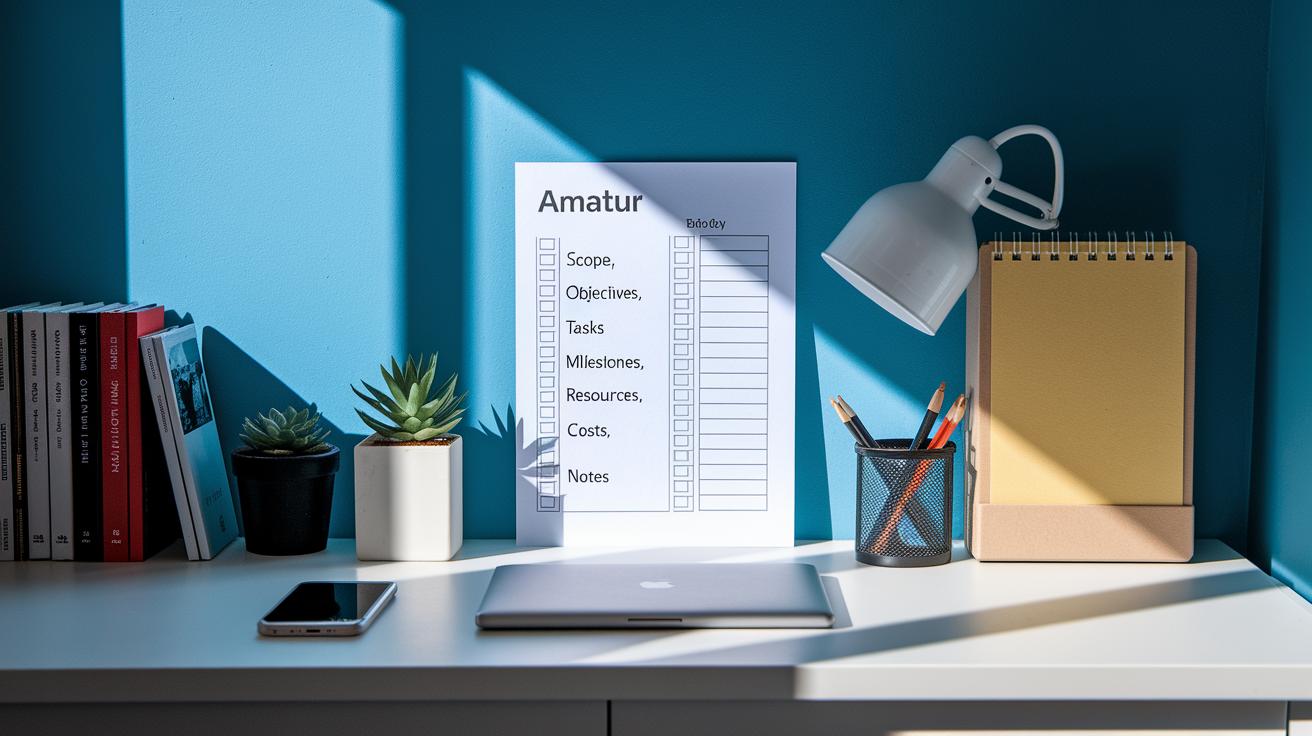
This template gives you a simple one-page checklist to track project priorities, deadlines, needed supplies, and time estimates. It also includes a detailed planner for listing resources and taking notes on measurements. Everything is laid out clearly so you do not repeat information.
- Scope summary: Define your project limits from the start.
- Objective matrix: List and track your goals.
- Task breakdown: Detail every step you need to take.
- Milestone dates: Mark important deadlines.
- Resource inventory: List supplies and suppliers.
- Cost fields: Estimate project expenses.
- Note and sketch areas: Jot down ideas or adjustments.
Each section helps you make smart decisions. Setting the scope and goals lets you see the size and targets of your project right away. Breaking down tasks and marking milestones keeps you on track and helps manage both resources and costs. The note sections are a place to capture ideas as your project progresses.
Tracking Timeline, Costs, and Resources in Your DIY Project Planning Template

Start by drawing up a clear timeline for your project. Write down the start and end dates for every phase. List major steps like when to order supplies, begin work, and finish tasks. This helps you see the whole project one step at a time.
Next, make a simple cost table for your materials. Note the expected prices for items such as lumber, hardware, and finish products. This table lets you add up costs easily and adjust your plan if prices change.
Then, gather a list of your go-to suppliers. Write down the names and contact details of local stores, websites, or vendors where you can buy your tools and materials. This list makes it easy to check product availability and plan your purchases.
Finally, set up a workflow that orders your tasks logically. Arrange your to-do list so each step follows naturally from the previous one. This organized approach keeps your daily tasks on track and your overall plan in view.
Effective Time and Progress Management with Your DIY Project Planning Template

Use your planner's timeline to set aside clear blocks of time for each step in your project. For example, you might plan a morning session for taking measurements and a later slot for ordering supplies. Write down something like "2 hours for prep work, 1 hour for review." This clear layout helps you focus and keeps stress low.
Check your to-do list every day. Whether you use a printed list or a digital version, take a few minutes in the morning or at the end of the day to review each task. This simple habit helps you catch any missed steps and highlights where you may need to spend extra time.
Update your progress regularly. When you reach the halfway point, pause to note what is done and adjust upcoming deadlines if needed. For instance, you can jot down, "Halfway through, focus on slower tasks." This practice helps you stay on track and fine-tune your schedule as the project moves forward.
Printable vs. Digital DIY Project Planning Template: Pros and Cons

Printable binders give you a reliable record you can mark up right on site. These paper pages are handy and clear during busy projects. One DIY enthusiast shared, "I trust my printed pages on windy, dusty job sites because screens are hard to see."
Digital templates come as fillable PDFs or spreadsheets that you can update instantly. They also let you save your work in the cloud for backup. One user shared, "I can adjust my project budget while I’m out and about, which I can’t do with prints."
When you choose between the two, think about how you work best. Printed versions provide quick, hands-on access at active job sites. Digital formats are perfect for making frequent changes and easy sharing, especially when planning remotely or juggling many projects.
Final Words
In the action, this guide walks you through planning, customizing, and tracking your projects with a free DIY project planning template. You learned how to tailor worksheets, monitor costs and timelines, and decide between printable or digital options for clear project steps. Each section builds your confidence and helps you avoid costly mistakes. Embrace the plan, stay organized, and enjoy turning ideas into real, budget-friendly improvements. Happy planning and enjoy the process!
FAQ
What file formats does a DIY project planning template support?
The DIY project planning template supports Excel, Word, and PDF formats. This means you can choose a method that fits your workflow, whether you need an editable spreadsheet, text document, or a printable design.
How do I access a free DIY project planning template download?
The free DIY project planning template download lets you quickly grab a ready-to-use version. You can select the file type that suits you and start planning your projects without any cost or hassles.
What are the benefits of a simple Excel project plan template free download?
A simple Excel project plan template free download offers organized layouts for tasks, deadlines, and budgets. It simplifies tracking progress and ensures you stay on schedule while keeping your project details clear.
How can a DIY project planning template help manage my project details?
A DIY project planning template helps you list priorities, deadlines, supply needs, and more in one place. This organized approach cuts down unnecessary store trips and keeps every project detail easy to review.