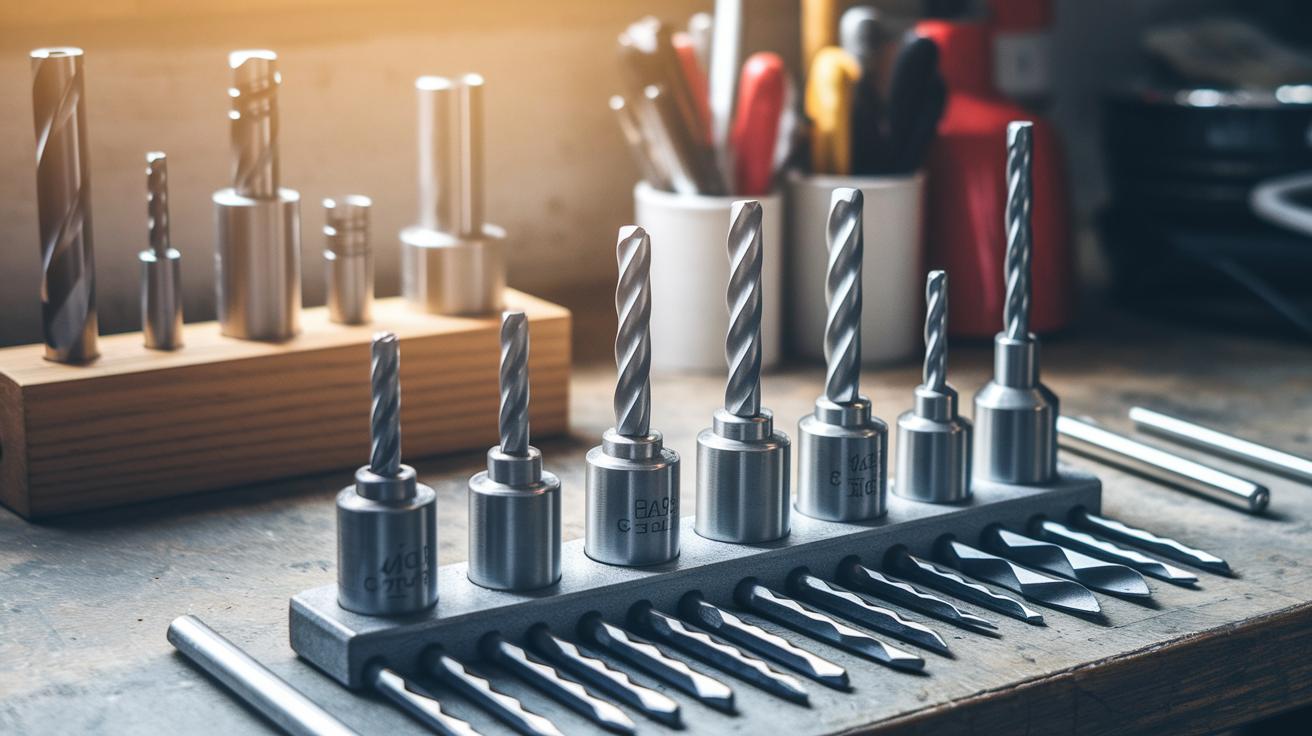

Have you noticed that some DIY projects go smoothly while others end up a mess? The drill bits you use might be the reason. When you know which bit to use for wood, metal, tile, or concrete, you can finish your project cleaner and faster.
This guide covers bits for everyday use and special bits for more delicate jobs. The right bit saves you time and protects your work. Ready to boost your skills and enjoy better results on your next project?
Drill Bit Set Types and Uses: Excellent Versatility

General-purpose drill bits, like the twist style, are must-haves in any toolbox. They let you make neat holes in wood, metal, tile, and masonry, which makes them great for everyday jobs. Twist bits work well in soft metals, plastics, and wood, and they give you steady results every time. Their straight grooves push out debris so you get cleaner cuts. For example, when you drill into plywood, you will see the twist bit glide smoothly, saving you time and effort while protecting the wood.
In woodworking, special bits are a big help. Brad-point bits, for instance, start holes cleanly in lumber and lower the chance of splitting. If you need a larger hole, spade, auger, or Forstner bits are made to remove plugs of wood efficiently while keeping the bottom flat for a perfect fit. When you switch to masonry, standard carbide-tipped masonry bits and SDS bits handle bricks, stone, and concrete. They are built tough to take impact drilling, so you feel less vibration and get more control even in hard materials.
Specialty bits round out your set by handling unique tasks with care. Step drill bits let you change hole sizes in sheet metal without bending it. For tile and glass, bits with spear or diamond tips help lower the risk of chipping fragile surfaces. Countersink bits create angled recesses for screw heads to sit flush. These extra options make sure your drill bit set is ready for any project, whether it is a decorative upgrade or an important repair.
Drill Bit Material and Anatomy Insights

Drill bit performance starts with its design. The grooves, called flutes, help remove waste chips and keep the bit cool. The tip angle is also key. A 118° tip works well for everyday drilling while a 135° tip (a split point) cuts more cleanly and controls kickback. The type of shank matters too. Round shanks fit standard drills, hex shanks give a firmer grip for impact drivers, and SDS shanks lock into rotary hammers for heavy work.
The material and finish of the bit are just as important. High-speed steel (HSS) is a popular choice due to its overall strength for everyday tasks. Cobalt bits, which contain 5–8% cobalt, offer extra heat resistance for drilling into tougher metals like stainless steel. Titanium nitride (TiN) coatings lower friction and help the bit last longer during big projects. Black oxide adds corrosion resistance and makes the drill glide smoother in wood and metal. Tungsten carbide bits are extremely hard and can handle tough materials like concrete, tile, or masonry.
Each part of the bit, from the flute shape and tip angle to the shank and material, works together to provide better cutting, longer life, and the right match for your job.
| Material/Feature | Key Property | Ideal Application |
|---|---|---|
| HSS | General-use hardness | Wood, plastics, mild steel |
| Cobalt | High heat resistance | Stainless, hardened metals |
| Titanium-coated | Reduced friction | Prolonged general drilling |
| Black Oxide | Corrosion resistance | Wood, metal, fiberglass |
| Tungsten Carbide | Extreme hardness | Concrete, tile, masonry |
Selecting the Right Drill Bit Set for Your Drill and Project

Start by checking the materials you will work with. If you are drilling in wood, choose bits made for lumber. For concrete, use masonry bits. When working with metal, select bits designed for steel. Make sure the bit shank works with your drill. A round or hex shank fits most drills while SDS shanks work best with hammer drills. For example, when drilling pilot holes in wood, a standard wood bit with a round shank gives a secure fit.
Next, decide how many bits and what sizes you need. Bigger projects may call for a range from small pilot-hole bits to larger boring bits. Sometimes paying a bit more for cobalt or carbide bits is a wise choice. These bits last longer when you work with hard materials. Balancing cost with performance helps you build a set that fits your budget and meets your needs.
Finally, take time to maintain and store your bits properly. After each use, clean off any debris to keep the bits working smoothly. Sharpen metal bits regularly using a bench grinder or a sharpening tool. Store your bits in a dry, organized case to prevent rust. This simple care routine keeps your drill bits in top shape and ready for your next project.
Specialty and Advanced Drill Bit Set Comparisons

Step bits give you a range of hole sizes for drilling into sheet metal. They work with widths from 1/4 inch to 3/4 inch and let you make several hole sizes from one set. This makes them a good choice for projects such as ductwork or custom metal enclosures. On the other hand, hole saws are meant for much larger openings, from 1/2 inch up to 4 inches. They attach to an arbor that holds the blade steady while cutting. This setup helps you get clean edges in wood, metal, or tile. For instance, if you are updating a light fixture, you might use a hole saw to create a bigger opening that fits perfectly.
Masonry hammer drill sets are built for tough jobs. They combine standard carbide-tipped bits with advanced SDS Plus and SDS Max shanks (SDS is a drill system that helps with tough materials). These bits work well on hard surfaces like brick, stone, or concrete. The carbide-tipped bits deliver steady performance for everyday masonry tasks. Meanwhile, the SDS systems make it easier to control vibration and clear out debris, so you get a neat, precise hole. Whether you are fixing a concrete wall or installing a new fireplace, these sets help keep your work secure and accurate.
Professional multi-substrate bit collections mix together bits made of high-speed steel (HSS), cobalt, carbide, and even diamond-tipped options, usually ranging from 20 to 100 pieces. This diverse kit is designed to work on many materials, from wood and plastic to steel, tile, and glass. In addition, countersink bits make it easier to set screws flush with the surface, and nut driver or extension bits help you reach tight spaces. With this all-in-one collection, you have the right bit for almost any project.
Maintenance and Care Practices for Drill Bit Longevity

After each use, clean your drill bits with a soft brush or a gentle cloth. This helps remove metal shavings and dirt. If you see stubborn build-up on carbide or cobalt bits, use a cloth dampened with a mild detergent. Wipe away any oily residue and dry the bit right away. For example, if a bit gets oily on the job, a lightly dampened cloth works well for a quick clean.
When your metal bits start to lose their edge after heavy use, sharpen them with a bench grinder or a bit sharpening tool. Hold the bit steady and use light, even passes to keep a sharp edge. This method slows heat buildup and helps the bit work smoothly. For example, lightly grind the edge for a few seconds until it is defined. Take care not to grind too much.
Store your bits in a dry and organized case to keep them from rusting or getting damaged. Check each bit before beginning a project to look for wear, misalignment, or chipping. You can use chip trays or magnetic holders to sort your bits by size for quick access. For example, if you notice a slight bend in a bit, place it in a "to-sharpen" section rather than using it immediately.
Final Words
In the action, we dove into the range of bit categories, from general-purpose twist bits and precise woodworking bits to heavy-duty masonry and specialty cutters. We also covered key details on bit construction, proper care, and smart selection for your drill and projects. Each step explained how regular maintenance ensures lasting performance and safety. Embrace these lessons to confidently tackle your next project, using various drill bit set types and uses for beautiful, lasting results. Happy drilling and safe DIY-ing!
FAQ
What are common drill bit set types and their uses?
The common drill bit sets include twist bits for general work, brad-point bits for clean wood holes, masonry bits for brick or concrete, and specialty bits like a step bit for sheet metal.
How do drill bits for metal differ from other types?
Drill bits for metal are often made with cobalt or titanium-coated high-speed steel to handle heat and wear, ensuring precise cuts and longer tool life compared to standard wood or masonry bits.
How do professionals choose their drill bit sets?
Professionals choose drill bit sets based on material compatibility, shank design, and durability. They select sets with a variety of sizes and coatings suited to specific tasks in metal, wood, and masonry.
Where can I find visual guides or PDFs for drill bit set types and uses?
Visual guides and PDFs often show drill bit set types with pictures and detailed usage instructions. These resources help you match the right bit to your material and project needs.
What are the different names for drill bit types?
Drill bit types are named based on their design and application, including twist, brad-point, spade, auger, masonry, countersink, and step bits, each serving a unique purpose in various projects.