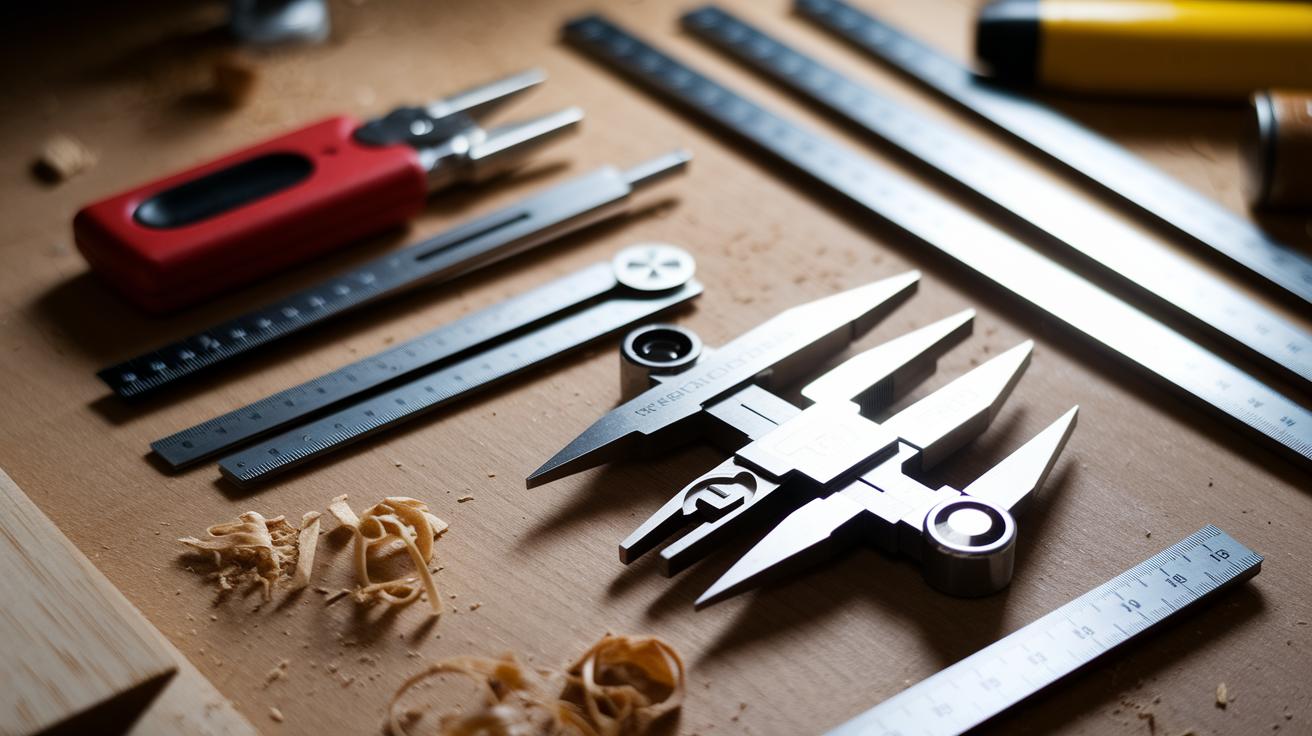

Have you ever wondered why some woodworkers nail it on the first try? The secret lies in using the right measuring tools.
Tools such as tape measures, combination squares, and calipers (a tool that checks measurements accurately) help you save time, reduce waste, and improve your work.
Every exact measurement paves the way for tight joints and smooth fits. In this guide, we share the essential tools that will boost your craftsmanship and help turn your projects into art.
Essential Precision Measuring Tools for Woodworking
Accuracy is the backbone of woodworking. Precise measurements help you create snug joints, smooth fits, and a finished project that looks professional. Every cut and angle needs to be just right to reduce waste and save time.
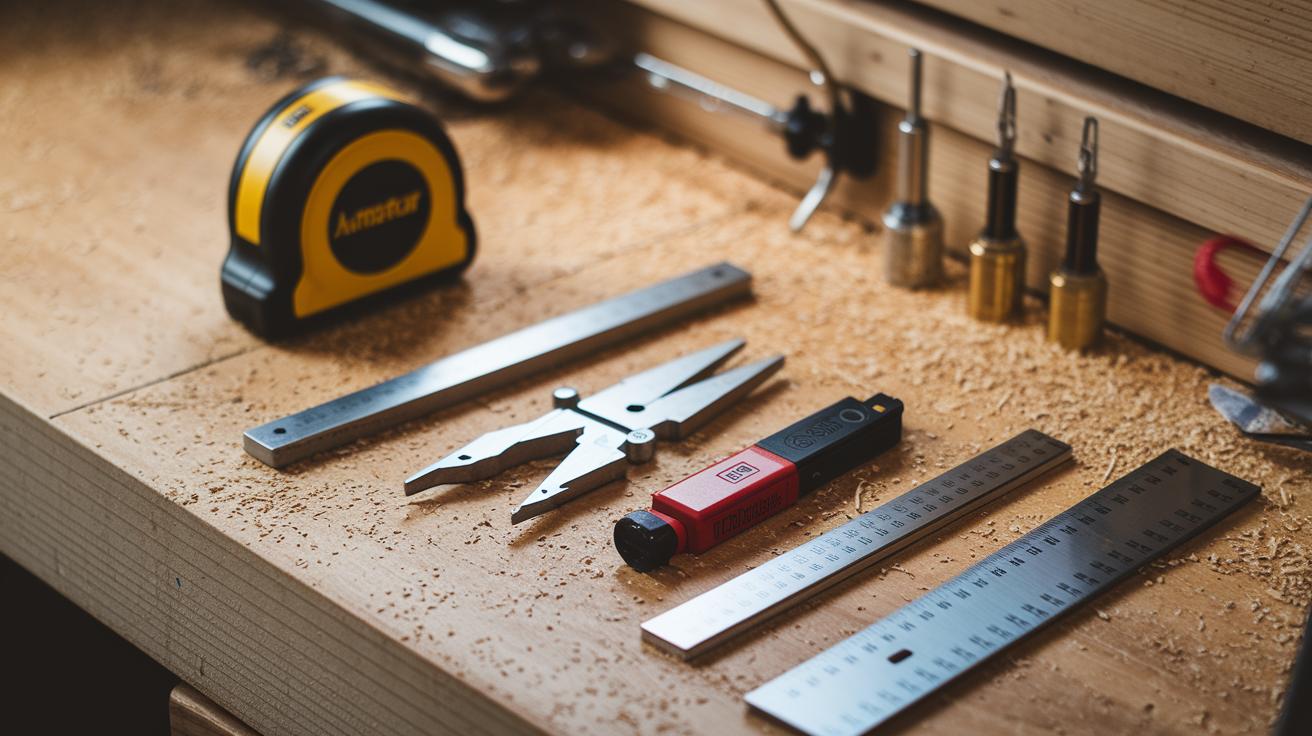
In your woodshop, different tools help with various measurement tasks. Some tools work well for long distances, while others handle small details, angles, or even machine setups. Here are the top seven measuring tools you should have:
- Tape Measure: Choose a 16-ft tape for most furniture projects or a 25-ft version for large framing. It accurately measures length, width, and height in both inches and centimeters.
- Combination Square: Use this tool for setting perfect 90° and 45° angles. It also measures depths and checks squareness using its built-in level and scriber.
- Calipers: Available in analog, digital, or vernier styles, calipers measure internal and external dimensions down to fractions of a millimeter.
- Marking Gauge: This tool scribes parallel lines for joinery tasks like dovetails or lap joints. It provides a sharp knife edge for cleaner cuts.
- Digital Angle Finder: This device gives readings from 0 to 360° with an accuracy of 0.1–1°. It features an LED display and resists dust and water.
- Dial Indicator: Use this tool to check and fine-tune machine setups, such as table saws or routers, ensuring precise operation.
- Framing Square: Ideal for larger projects, this tool checks right angles over a bigger span than a combination square.
Start with your tape measure and combination square to mark out your workpiece. Then, use calipers and marking gauges to guide your joinery tasks. Next, check your machines and cuts with the digital angle finder and dial indicator. Finish by using the framing square to ensure your large assemblies maintain perfect right angles throughout the build.
Precision Woodworking Squares: Choosing the Right Square
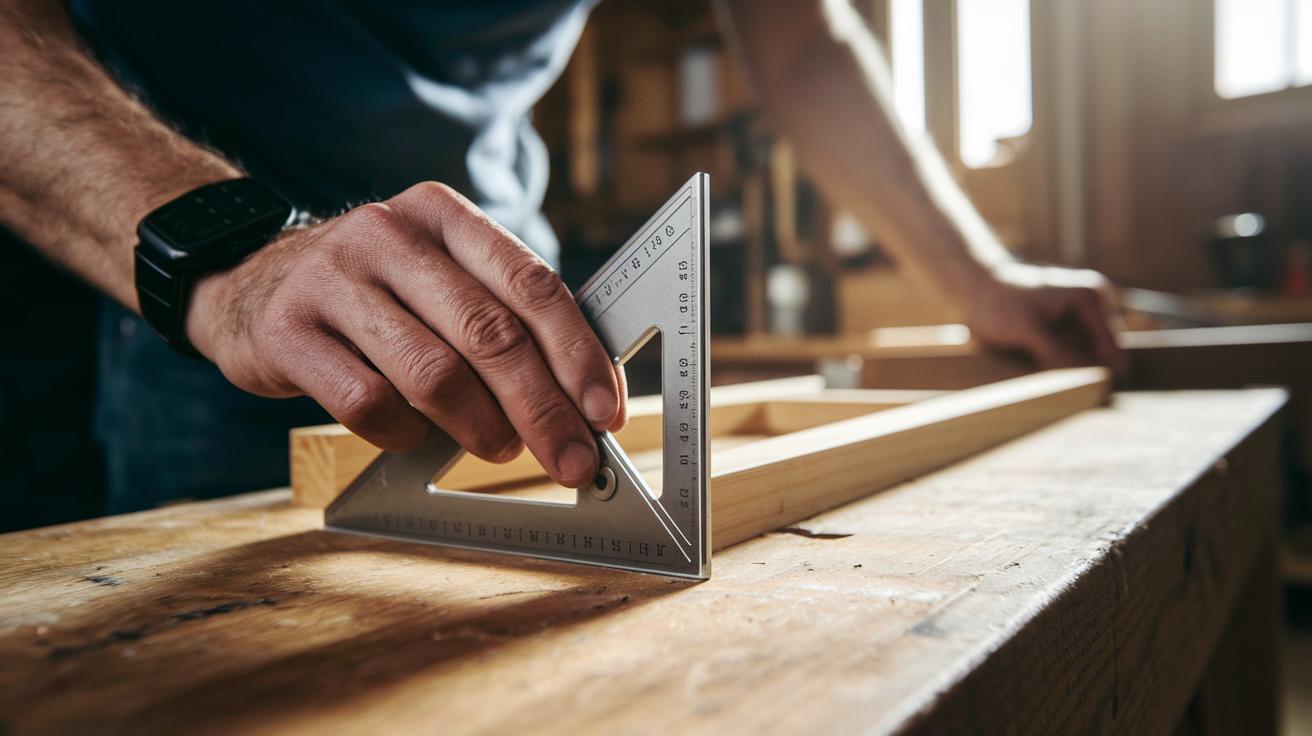
Squares are key in getting your woodworking layout just right. They help you make perfect cuts and joints at 90 and 45 degrees. Whether you're working on simple joinery or tackling a framing project, a reliable square makes all the difference.
| Tool | Accuracy | Primary Use | Price Range |
|---|---|---|---|
| Combination Square | High (for 90 and 45 degree checks) | Layout and depth measurements | $20–$50 |
| Framing Square | Moderate to High | Large right-angle checks | $15–$40 |
| Precision Machinist Square | Factory-grade | Precise squareness tests | $50–$150 |
Before making any critical cuts, check your square's accuracy. Draw two parallel lines using the square, then flip it over and draw again. If the lines do not match, you may need to recalibrate or adjust your square.
For a quick test, set the square along an edge and ensure the bubble in the vial sits right in the middle. Clean your square regularly and store it in a dry place to prevent rust or warping. Compare your measurements with a trusted reference tool to boost your confidence, whether you are laying out a piece of furniture or building stairs.
Taking these steps helps you keep your layout true, saves you time, reduces waste, and results in strong, attractive joints in your work.
Precision Calipers and Micrometers for Woodworking Accuracy
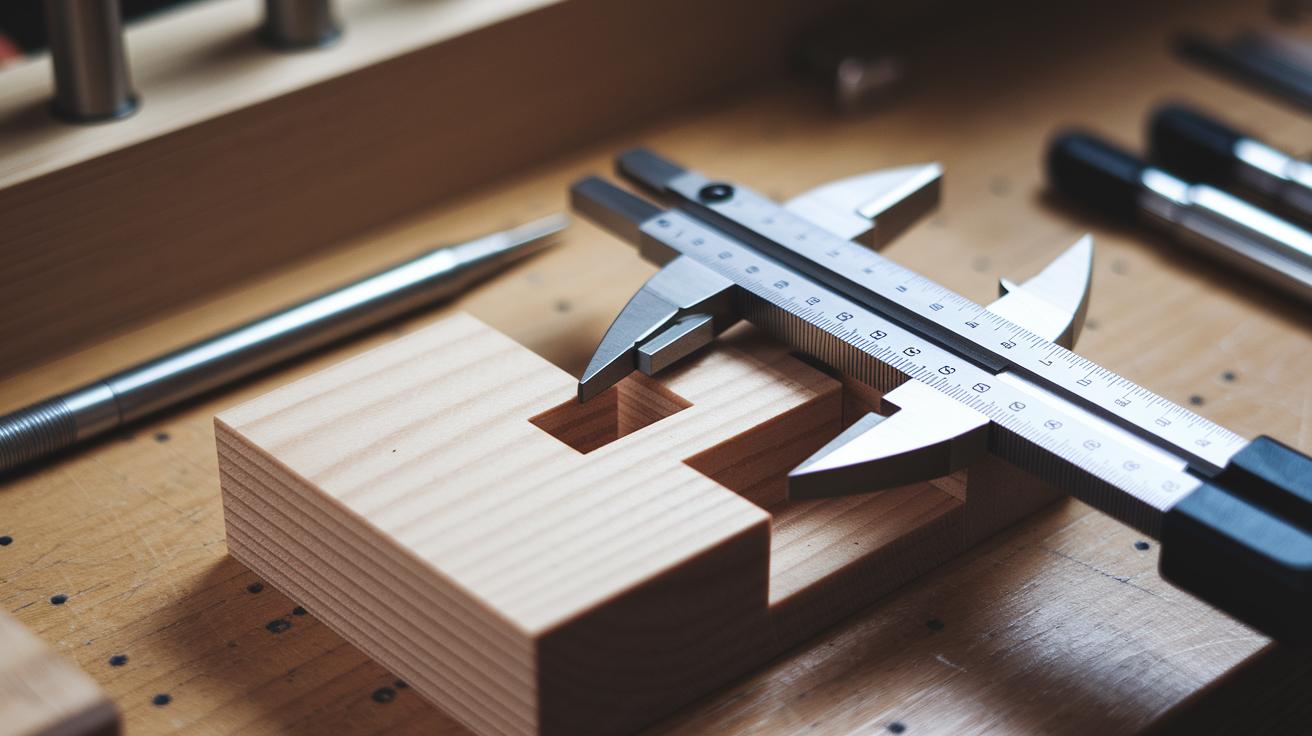
When tape measures or squares just don't cut it, calipers and micrometers step in. They help you measure both inside holes and outside edges with precision as fine as 0.01 mm (0.0005 in.). These tools come in handy for any detailed woodworking project.
Digital calipers are easy to use. They have an LCD screen for clear readings and a zero-setting function to clear any starting error. You can quickly switch between metric and imperial units to match your project needs. They also come with a ratchet-thimble that ensures you apply steady pressure during measurement.
Vernier and analog calipers work with etched scales that you read carefully. They can be very accurate, often around ±0.02 mm if you choose a quality model. These calipers offer a cost-effective solution without sacrificing precision. Just remember to clean them well so that dust or debris does not spoil your measurements.
Micrometers are great for measuring small details like thickness and tiny depths. They use a ratchet thimble to give a uniform pressure every time. Many use hardened anvils and locking spindles to keep readings consistent. To make sure they stay accurate, calibrate them often with gauge blocks or a known standard.
Store your calipers and micrometers in a dry, padded case to protect them from bumps and moisture. Check the zero setting from time to time and use gauge blocks to test their accuracy. After heavy use, wipe down the jaws and scales with a lint-free cloth and add a light drop of machine oil on the moving parts. Regular care ensures that your measurements stay reliable for every project.
Angle and Alignment: Advanced Measuring Devices for Precision Woodworking

If you want your woodworking joints to fit perfectly, you need tools that measure angles accurately. Good tools make sure your joints align well and your miters come out just right. These devices help you create smooth transitions and tight fits every time.
Here are some tools to consider:
- Digital Angle Finder: This tool measures a full 360 degrees with precision down to 0.1 to 1 degree. It has an LED display and a water and dust sealed case that works well in different conditions.
- Sliding Bevel Gauge: This tool comes with an adjustable blade that locks with a knurled nut. Its sturdy handle makes it easy to copy angles from one piece to another.
- Angle Gauge: This weighted block lets you quickly check and copy angles. Its heaviness keeps it steady during your work.
- Laser Level: This device projects straight lines on walls and floors so you can see when things are level or plumb. It works even in low light or across long distances.
- Spirit Level: This classic tool uses a bubble vial to give you a fast check on horizontal or vertical alignment.
When using these tools, start by setting the device to zero on a flat, known surface. For example, set your digital angle finder to zero on a level board, then compare it with a trusted standard. Make sure the sliding bevel gauge is locked firmly when you transfer angles. Check the angle gauge readings against a known reference and use a spirit level to verify the laser level lines. Regular cleaning and proper storage will keep your tools accurate and ready when you need them.
Professional Woodworking Marking Gauges and Precision Layout Tools

Clear scribing is the first step to solid saw and chisel work. When your lines are drawn true, your joints fit snugly. This careful marking saves you time by reducing later adjustments. For example, if you mark a dovetail slightly off, you may waste wood or weaken the join. These tools help you mark your work with clear, repeatable lines so that every cut and chisel stroke lands correctly.
- Pin-type Marking Gauge: Use this tool's sharp pin to draw steady, parallel lines for dovetails and lap joints.
- Cutting Gauge: Swap the pin for a knife edge to cut surface fibers and create a cleaner cross-grain mark.
- Edge-Guide Marker: Clamp it to your workpiece and scribe accurate, repeatable lines along the edge.
- Fine Marking Knife: Use this for detailed work and delicate joinery when you need super-precise marks.
Make sure to check your gauge fences often to keep your work accurate. Always line up the fence with a straight reference edge since even a small misalignment can ruin your layout. Replace worn scribing pins right away, and keep a spare on hand. If the pin gets dull, switch it with a freshly sharpened one to keep your marks crisp every time.
Calibration and Maintenance of Precision Measuring Tools for Woodworking
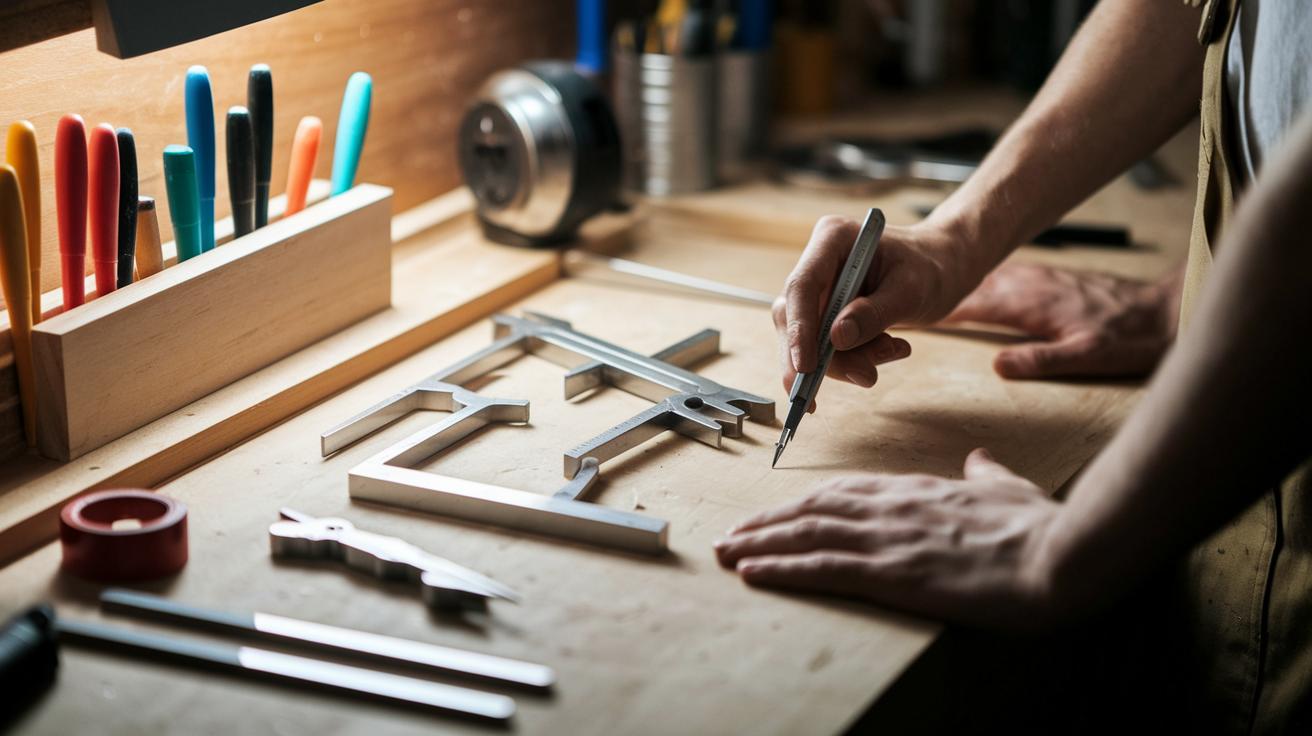
Even the best woodworking tools can lose their edge over time. Frequent use, temperature swings, and small bumps all change how well they work. It is important to keep your calipers, squares, and other measuring tools in top shape so your projects stay true to plan.
- Clean: Wipe down blades, jaws, and scales with a lint-free cloth to clear away dust and debris.
- Lubricate: Put a drop of machine oil on caliper slides and moving parts. This stops rust and keeps things moving smoothly.
- Inspect: Look closely at key measuring points for any signs of damage or wear. Replace parts when needed.
- Calibrate: Use gauge blocks or reference squares to adjust the zero and span settings. Check your work with a speed square and verify with a precision machinist square.
- Store: Keep your tools in a clean, dry case or on a rack. This protects them from impacts, moisture, and dust buildup.
Plan for a detailed maintenance session every few months. Keeping a log of calibration dates and any replaced parts will help you track the condition of your tools and keep every woodworking project running smoothly.
Selecting the Best Precision Measurement Kits for Woodworking Projects

A good measurement kit saves you time by making sure all your tools work well together. When you buy a complete kit, you avoid mix-ups between different scales and units that can cause errors in your work. A typical kit has a 16-ft tape measure, a combination square, digital calipers with a 0.01 mm resolution (which means they measure very finely), a marking gauge, and a digital angle finder. Whether you work on detailed furniture, framing, or cabinets, choosing a kit that suits your needs makes setup easier and boosts accuracy.
Here are some tips to consider when choosing your kit:
- Project type: Pick a kit made for the kind of work you do.
- Required accuracy: Think about how precise your work needs to be, fine details need more accurate tools.
- Tool variety: Choose a kit that covers everything from measuring angles to lengths.
- Build quality: Look for sturdy tools that can handle the wear and tear of the workshop.
- Calibration support: Some kits have calibration blocks or come with certification to help keep them accurate over time.
Before you decide, check for a solid warranty, a trusted manufacturer, and options to upgrade if your projects grow. It is a bonus if your tools show both metric and imperial measurements and come in a tough case to keep them organized and safe.
Final Words
In the action, we covered accurate layout and cutting techniques using simple yet reliable methods. We broke down each tool group, from tape measures to advanced digital calipers, explaining how they work together in your woodshop. Practical tips on calibration and maintenance help ensure every cut is true. This guide shows you that with the right tools and care, even amateur projects can turn professional. Keep practicing and improving your setup with precision measuring tools for woodworking. Enjoy creating and watching your work come to life!
FAQ
What are professional precision measuring tools for woodworking?
The term professional precision measuring tools for woodworking refers to instruments like tape measures, combination squares, and calipers that ensure exact cuts and layouts in projects, making them vital for reliable woodshop accuracy.
What are the best precision measuring tools for woodworking?
The best precision measuring tools for woodworking include a tape measure, combination square, calipers, marking gauge, and digital angle finder, providing accurate results for detailed layouts and precise cuts in your projects.
Where can I purchase precision measuring tools for woodworking on Amazon?
The term precision measuring tools for woodworking on Amazon represents a wide range of instruments. Many woodworkers rely on detailed reviews and competitive pricing found on the platform to choose the right tools for their needs.
What does a precision measuring tools list for woodworking include?
The precision measuring tools list for woodworking typically features a tape measure, combination square, calipers, marking gauge, digital angle finder, dial indicator, and framing square, covering all essential measurements needed for woodworking tasks.
What are the 5 measuring tools in carpentry?
The 5 measuring tools in carpentry usually consist of a tape measure, combination square, calipers, marking gauge, and digital angle finder, each addressing critical measurements and layout accuracy for quality wood projects.
What are essential woodworking measuring tools?
Essential woodworking measuring tools include items such as tape measures, combination squares, calipers, marking gauges, and digital angle finders, all of which help achieve precise layouts and cuts in a range of woodworking projects.
What are woodwork measuring tools and their uses?
Woodwork measuring tools include tape measures for basic dimensions, combination squares for checking right angles, calipers for fine measurements, and marking gauges for layout lines, each serving a specific role in ensuring project accuracy.