

Is your workshop feeling like a wild jungle? Tame the mess and let your projects shine. When every tool has its own spot, you can grab that wrench or screwdriver in a snap. This guide gives you budget-friendly ideas to turn clutter into a clean and efficient workspace. Whether your shop is small or large, you will find creative ways to keep your tools neat so you can work without any hassle.
Practical Tool Organizer Ideas for Your Home Workshop
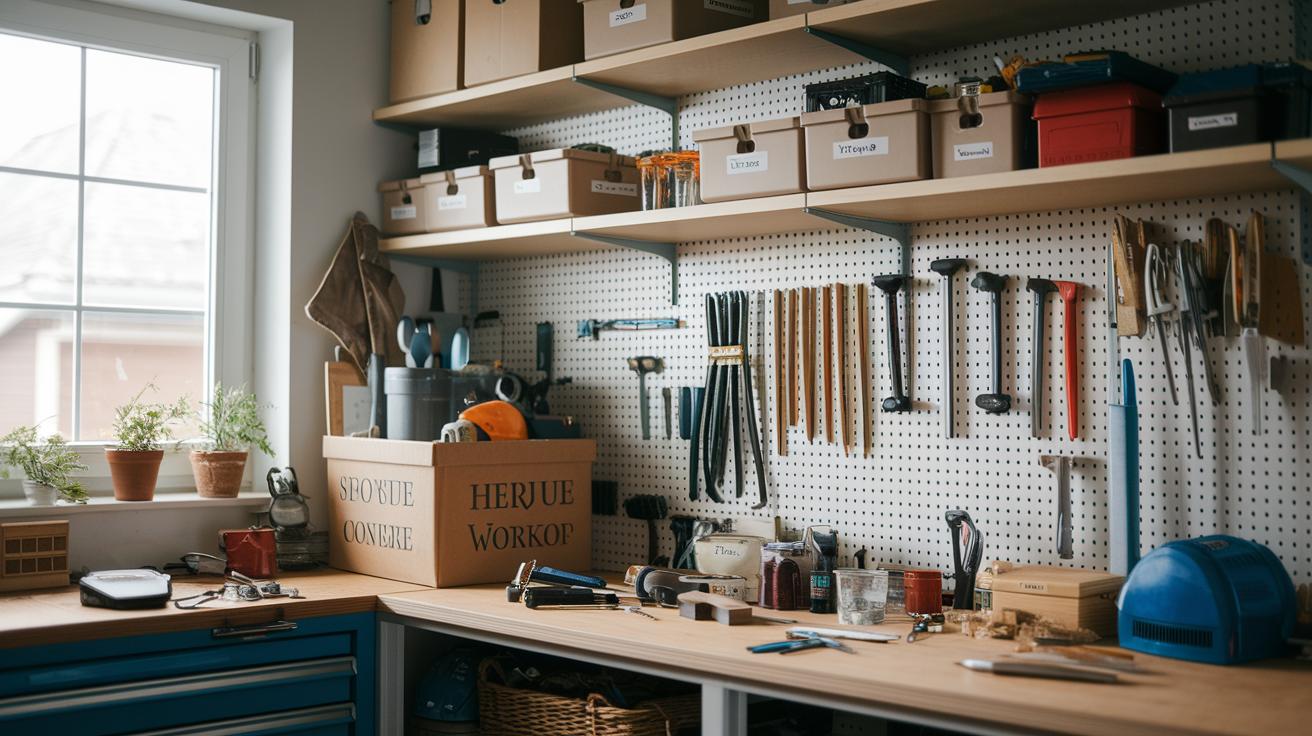
Make the most of your workshop and boost your work speed with smart storage ideas. When space is tight, every inch counts. Smart organizers keep your tools neat and easy to grab so you can focus on your projects instead of searching through clutter.
No matter if you work in a small garage or a large workshop, an organized tool setup saves you time and energy. By mixing ideas from repurposed items and storage made just for tools, you create a system that fits your needs. The ideas below are simple, budget-friendly, and stylish.
- Repurposed boxes: Nest small boxes inside larger ones. Use a utility knife to trim oversized boxes for a custom fit.
- Magnetic panels: Hang metal tools on your walls. These panels can hold up to 5 lbs without extra shelves.
- Large metal basin: Use a copper or brass basin as a deep, durable tote for loose items and liquids.
- Forged-steel hooks: Mount sturdy hooks that extend about 2 inches. You can also use a folding hanger with 10 hooks for up to 3 feet of wall.
- Adhesive hook-and-loop strips: Tie up cords and wires quickly with these reusable strips.
- Classic tool chests: Choose a tool chest with six small drawers or a larger rolling cabinet with felt lining and strong locks.
- Pegboards: Install a quality pegboard with two-anchor hooks to stop sagging and let panels swing freely.
- PVC pipes: Cut and join PVC pipes to create vertical holders, displays like a wine rack, or curved shelves.
- Aerosol can shelf: Build a shelf with two angled surfaces, drip holes, and a built-in paper towel holder.
- Foam drawer organizers: Craft custom-cut foam boards to keep each tool separate and within easy reach.
Mixing these storage ideas lets you create specific zones for different tool types. This way, your workshop stays flexible and efficient.
Maximizing Wall Space with Pegboards and Mounted Racks
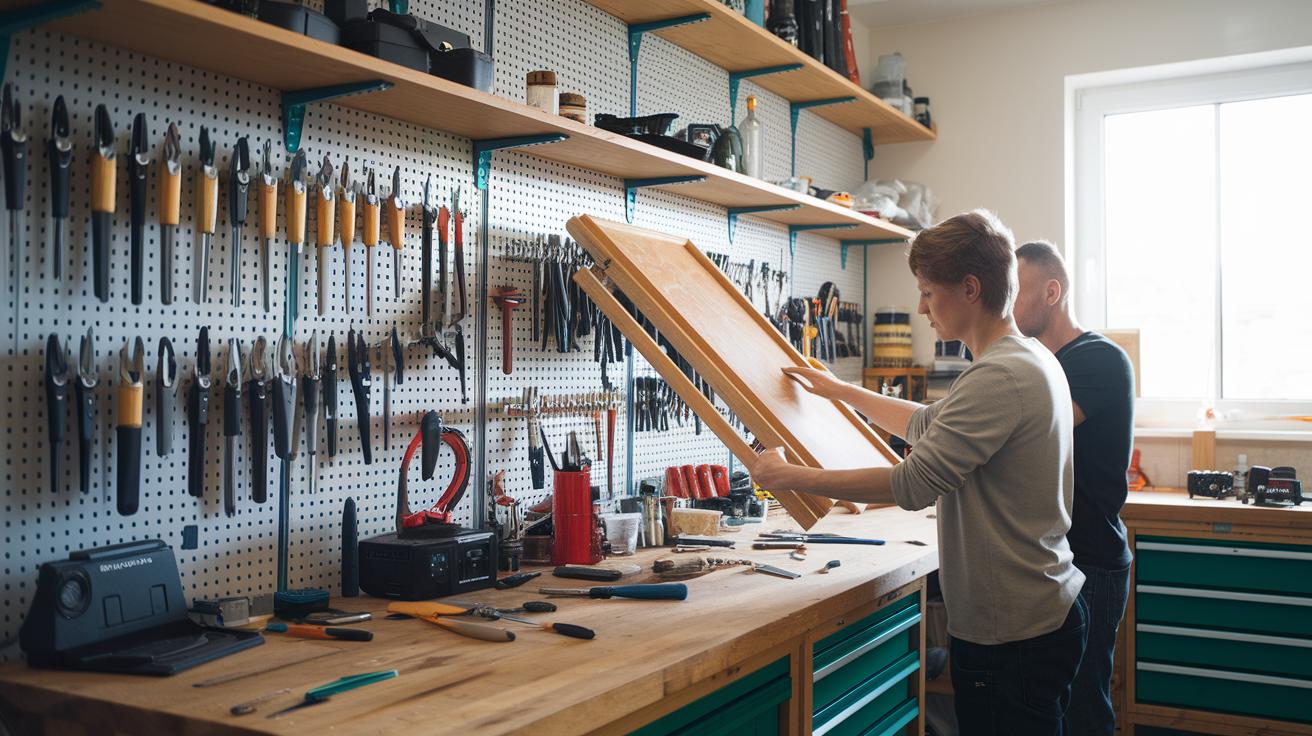
Clearing off your workbench and floor can make your workshop more efficient. When you move storage to your walls, you create extra room for projects and keep your tools in sight and easy to grab. Vertical solutions cut down on clutter and give you a clear space to work.
When picking a pegboard system, choose one made of strong materials. Look for boards that use quality hooks with two anchors so they stay tight. Make sure each hook holds up to 5 lbs to keep even heavy tools secure. Hang the pegboard at a height that works best for you so you can reach your tools easily.
Try adding swinging pegboard panels to boost your storage options further. These hinged panels let you quickly grab tools stored behind the board without messing up your flow. This approach gives you the freedom to adjust your layout as your tool collection grows or changes.
You can also add wall-mounted racks like slatwall metal panels to improve your setup. They work well with pegboards and help you build a custom, efficient workspace.
DIY Mobile Tool Caddy Designs for On-the-Go Workshop Tasks

A mobile tool station lets you keep all your gear handy so you can jump from one project to the next without hunting down your tools.
Materials List:
• 1 large metal basin (copper or brass works best because it lasts longer)
• PVC pipe sections (cut to the size you need)
• A strong adhesive (heavy-duty glue works well)
• Foam core board (use this to line compartments)
• Mounting hardware (screws or bolts suitable for metal)
For sizing your caddy base, check out some DIY workbench plans for tips.
Assembly Steps:
- Cut the PVC pipes to the lengths you need so they fit snugly along the basin’s rim. Use a saw to make straight, clean cuts.
- Drill evenly spaced holes along the edge of the basin. This helps secure the PVC pipes.
- Attach the PVC pipes using the adhesive and mounting hardware. Make sure they sit flush so they form solid, vertical holders.
- If you plan to add drawers or compartments, cut the foam core board to fit. Slide them in to create neat storage for small tools and accessories.
- Customize your caddy by adding handles, partitions, or even a fresh coat of paint. Adjust these details to match your work style.
Efficient Drawer and Chest Organization Techniques
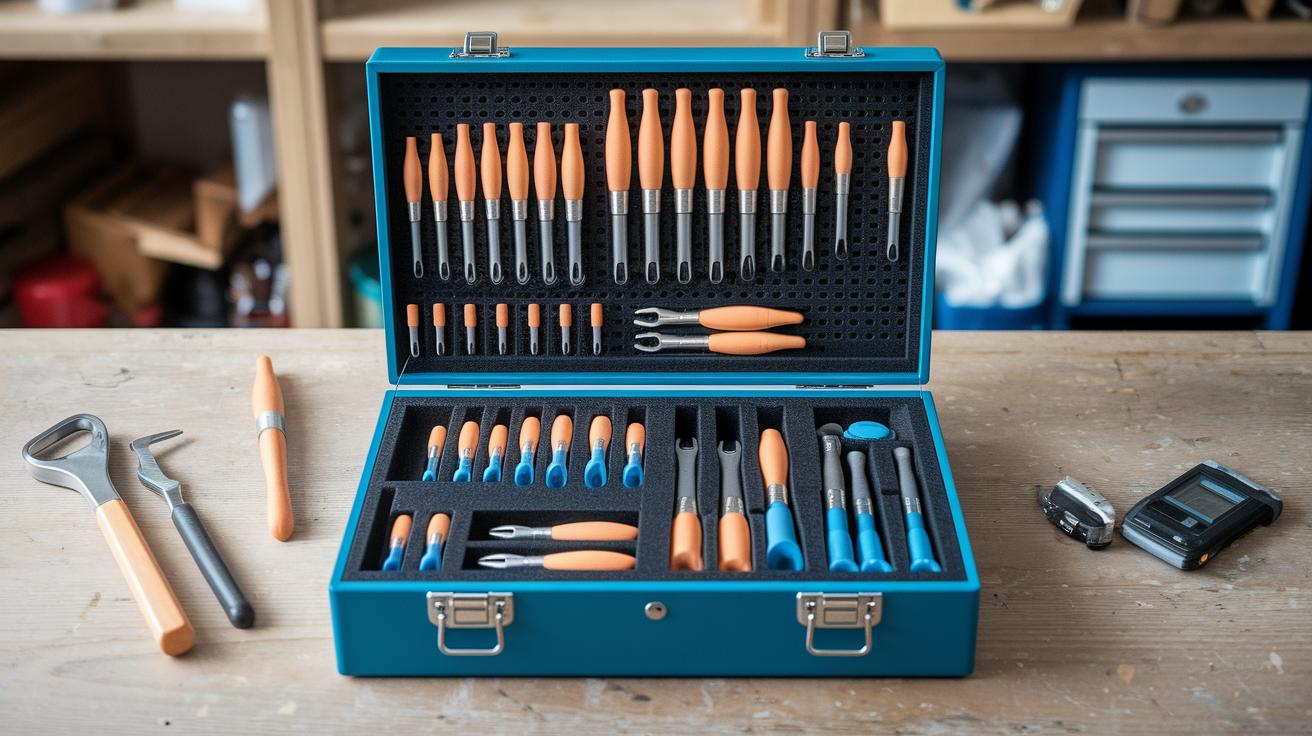
Keeping your tool chest organized saves time and helps your tools last longer. Regular care such as cleaning, checking locks, and realigning the chest can cut down on wear and tear. One tool owner said cleaning the chest every month lowered rust and tool misplacement.
Plan your foam-insert partitions with a layered design that fits each tool well. Use a firm foam base topped with a softer cushion to absorb shocks. Measure your tools carefully for a custom fit. For example, you might use a 1/2-inch foam base with a 1/4-inch cushion for a cordless drill.
| Material | Pros | Cons |
|---|---|---|
| Felt | Soft and cushioned | Wears quickly |
| Foam Core | Custom fit, good shock absorption | May compress over time |
| Rubber | Durable and easy to clean | Heavier, less cushioning |
Consider adding smart features to boost security and ease of use. Sensor locks and built-in LED lights can make it simpler to find your tools quickly. One user explained that when they open the chest, the sensors turn on a soft light that highlights each section, making tool retrieval fast and easy.
Creative Repurposed Hacks for Budget-Friendly Organization

Budget solutions let you build your own workshop without spending too much money. They also encourage you to reuse items in smart ways that add both style and use to your space.
When you add a creative twist, everyday items can become clever storage options. You can mix in eco-friendly ideas that are new and unique. This method saves money and makes your workshop stand out.
Try these innovative repurposing hacks for a distinct organizational edge:
- Turn an old wooden door into a pegboard for tools and supplies. For example, paint the door with a tough finish and add hooks and small bins to keep your items within reach.
- Change a used ladder into a wall organizer. Attach it securely to create several levels for hanging bags, tools, or buckets.
- Use vintage crates as sliding storage for small parts. With a few tweaks, you can mount them on rails to form a custom tool dispenser.
- Transform scrap wood pallets into shadow boxes by adding dividers and a clear finish. This design lets you show off your frequently used items while keeping them neat.
Organizing Small Parts with Dedicated Storage Systems
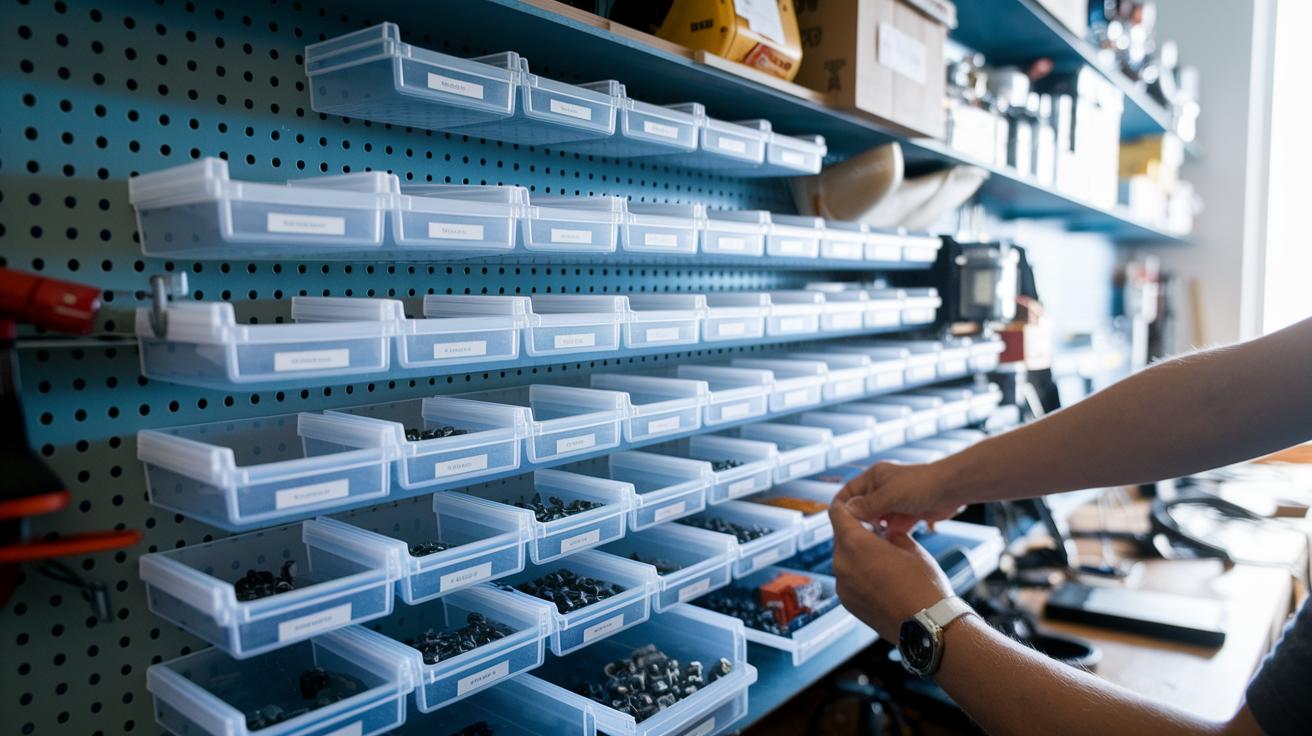
When you work with small parts like screws, washers, and bolts, keeping them in one handy place is key. These tiny items can easily get lost and slow your progress. A dedicated storage system lets you keep everything sorted into clear compartments so you can work quickly and avoid endless searches.
Whether you are just starting out or have years of DIY experience, a good organizer helps you spend more time building and less time hunting for parts. It also helps keep your tools safe and in good shape.
| Product | Capacity | Price Range |
|---|---|---|
| Sortimo T-Boxx | Modular compartments for small fasteners | High |
| HDX Organizer | Cost-effective flip-open bins | Low |
| Milwaukee Organizer | 10 spacious compartments for bulkier hardware | Mid |
Pick an organizer that fits the amount of parts you use. If you have many tiny items, a system like the Sortimo T-Boxx with modular compartments works well. If you're on a tight budget or have fewer parts, the HDX Organizer is a smart, simple choice. And if your projects involve larger pieces, try the Milwaukee Organizer with its roomier layout.
Planning Your Workshop Layout for Maximum Tool Efficiency
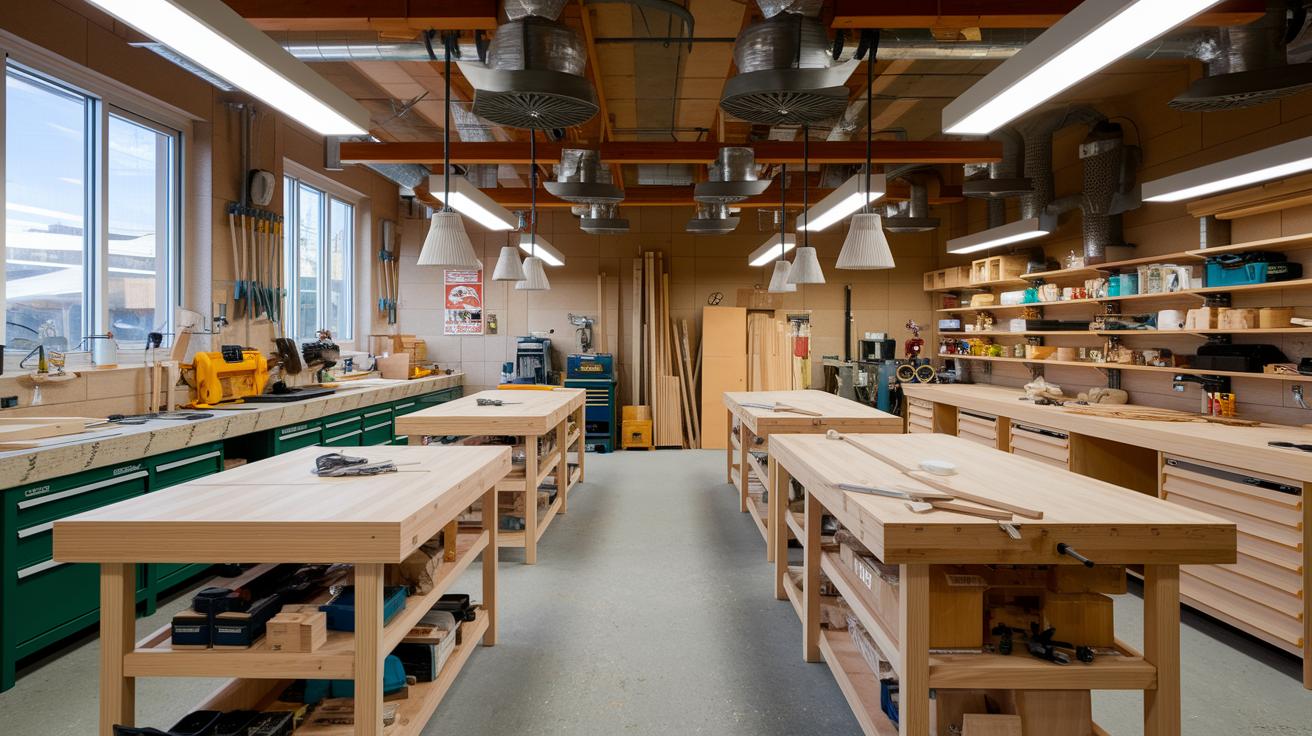
Group your tools by task so each area in your workshop has a clear role. Create specific zones for cutting, assembling, and finishing. Put your workbench close to the tools you use most often. This smart placement saves time and cuts down on clutter.
Keep your workspace clean with good dust-control methods. Use a Dust Deputy cyclone separator with hanging air filters to catch dust before it settles. Hang workshop curtains to define zones and stop dust from spreading. Mount overhead racks to store bulky items off the floor, making your space more open and easier to move around in.
A well-planned layout makes your workshop safer and more efficient. Clear zones, careful workbench placement, and solid dust management all help you work faster and keep hazards low.
Final Words
In the action, we explored practical tool organizer ideas for home workshop setups that maximize space and keep tools safe. We covered creative pegboards, mobile tool caddies, efficient drawer systems, and low-cost repurposing hacks. Each section offered clear steps and real solutions to tailor storage to your workflow. Experiment with these ideas to create a workspace that really works for you. Enjoy turning your workshop into a tidy, efficient place where every project is a little easier to tackle.
FAQ
Frequently Asked Questions
- What are woodworking tool organizer ideas for a home workshop?
- Woodworking tool organizer ideas include using repurposed boxes, magnetic panels, pegboards, and forged-steel hooks to keep tools within easy reach while maximizing your available workshop space.
- What are simple and DIY tool organizer ideas for a home workshop and small spaces?
- Simple and DIY ideas involve using adhesive hook-and-loop strips for bundling cords, foam drawer organizers for custom storage, and repurposed containers to create an efficient setup for limited space.
- What are the best tool organizer ideas for a home workshop?
- The best ideas feature custom foam inserts, classic tool chests with secure locks, and magnetic panels that hold tools neatly, ensuring you can quickly locate and access your equipment.
- How can Pinterest help inspire home workshop tool organizer ideas?
- Pinterest provides creative examples like repurposed materials, vertical pegboards, and DIY mobile caddies to spark design ideas; use these visuals as a guide to tailor storage solutions for your workshop.